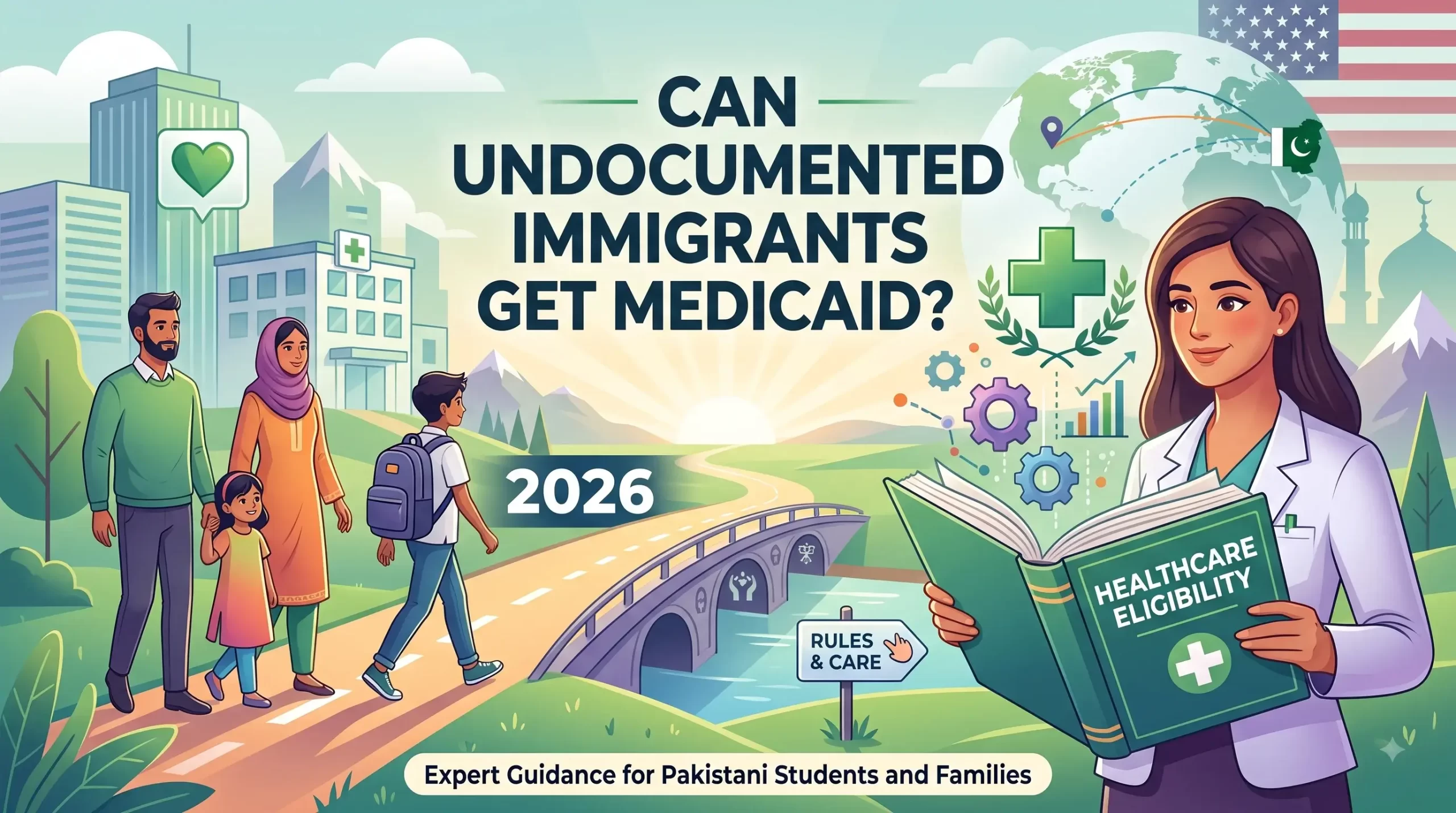
Undocumented immigrants do not get free healthcare in the United States. Federal law shuts them out of Medicaid, Medicare, and marketplace insurance plans. Emergency rooms must still treat them, but the hospital sends a bill afterwards.
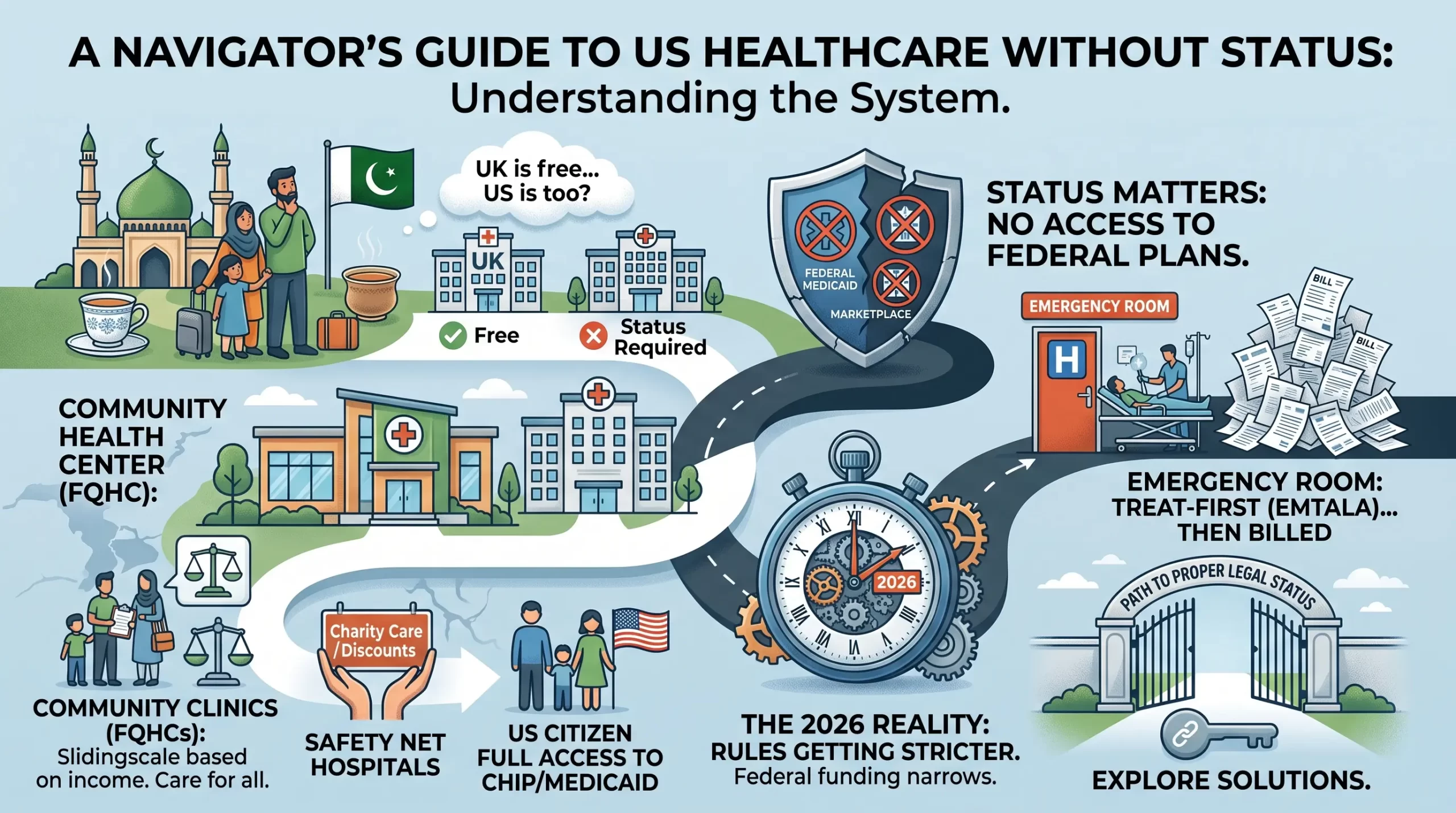
Many families in Pakistan assume America works like the United Kingdom. That assumption costs people a lot of money. American healthcare runs on private insurance. Even US citizens pay a premium every month. One night in a hospital can cost thousands of dollars without cover.
That gap matters if you plan to move. Life without legal status means life without a health safety net. At ATWICS Group, our business immigration consultants and visa consultants push clients toward proper legal status. Legal status protects both your health and your savings.
The Truth About Medicaid Eligibility and Federal Bans
Traditional Medicaid stays closed to anyone without a qualified immigration status. Income does not change that. Years spent living in the country do not change it either.
Medicaid is a joint federal and state program for low-income residents. To qualify, you need what the law calls a qualified status. The list covers green card holders, refugees, people granted asylum, and a few smaller groups. Undocumented people never appear on it.
The Affordable Care Act works the same way. Anyone without legal status is barred from the health insurance marketplace. They cannot buy a plan there even at full price with their own money.
Paying taxes does not create eligibility
Millions of undocumented workers file taxes each year using an ITIN number. Those payments fund Medicaid and Medicare for everyone else. The workers themselves still get nothing back from either program.
That surprises a lot of people. Tax records help with some immigration cases later, so keep them. They will not buy you a health plan today.
The five-year waiting period
Legal status alone does not open the door. Most adults who receive a green card must wait five years before they can claim full Medicaid.
Some groups skip that wait. Refugees, asylum grantees, and certain military families qualify straight away. Many states also cover lawfully present children and pregnant women without the delay.
| Status | Full Medicaid | Marketplace plan | Emergency care |
| US citizen | Yes, if income qualifies | Yes | Yes |
| Green card holder | Yes, usually after a five-year wait | Yes | Yes |
| Work or student visa holder | No | Yes, though subsidies end in January 2027 | Yes |
| Undocumented immigrant | No | No | Yes, under EMTALA |
What Happens in a Medical Crisis? EMTALA and Emergency Medicaid
An emergency room must treat you. The treatment is not free.
A federal law called EMTALA sets that rule. Every hospital emergency department that accepts Medicare has to screen each patient who walks in. If the patient has an emergency condition, staff must stabilize the patient before anything else. Nobody may ask about immigration status or insurance first.
EMTALA forces the treatment but says nothing about who pays for it. Once you are stable, the hospital bills you for the full cost.
Emergency Medicaid softens that blow in some cases. The program pays the hospital directly for stabilizing an urgent condition. Patients never receive an insurance card, so the help stops at the hospital door.
What Emergency Medicaid Covers
Emergency Medicaid usually covers the following:
- Sudden and severe events such as a heart attack, a stroke, or a serious accident
- Labor and delivery
- The care needed to stabilize the patient, and nothing past that point
What Emergency Medicaid Does Not Cover
Emergency Medicaid usually leaves out the following:
- Routine checkups and preventative care
- Long-term treatment for cancer or kidney failure in many states
- Medicines prescribed after discharge
- Dental care, eye care, and vaccinations
Alternative Health Coverage Options for the Uninsured
Community health centers handle most routine care for uninsured people. These clinics are the practical answer when insurance is off the table.
Federally Qualified Health Centers (FQHCs)
Federally Qualified Health Centers, known as FQHCs, run thousands of sites across the country. They treat every patient regardless of immigration status. Staff ask about your income, not about your papers.
Sliding Fee Scale
Care there is low cost rather than free. Clinics use a sliding fee scale, so your bill depends on household income and family size. A working family on a small wage may pay a flat fee of a few dollars per visit.
Healthcare Services Available
These centers usually offer the services below:
- Primary care and long-term illness checkups
- Prenatal visits and child health services
- Basic lab tests and screenings
- Mental health support and dental care at many sites
Safety Net Hospitals
Safety net hospitals fill the next gap. Most nonprofit hospitals must run a written financial assistance policy, often called charity care. Patients can apply for a discount or a full write-off of the bill.
Ask for the Financial Assistance Policy
Ask for that policy in writing on the day you receive treatment. Hospitals rarely mention it, and the application window can close once the bill reaches a collection agency.
Free Clinics and Pharmacy Discount Cards
Charity-run free clinics and pharmacy discount cards cover the rest. None of these options add up to real insurance. They keep a family going until proper coverage becomes possible.
Protecting Children and Navigating Mixed-Status Families
A US citizen child keeps full access to public health programs even when the parents lack status. Eligibility follows the child, not the parent.
Children born in the United States qualify for Medicaid and the Children’s Health Insurance Program. They apply on the same terms as any other citizen. CHIP exists for families who earn too much for Medicaid but too little for private insurance.
Fear of the public charge rule stops many parents from applying. That fear is mostly misplaced. Health benefits used by a citizen child are not counted against a parent’s future green card case. Officers review the applicant’s own record.
Several states go further and fund health programs for children regardless of status. Coverage varies a lot by state, so check local rules before you assume anything. A family in California faces a very different picture from a family in Texas.
The 2026 Healthcare Rules: What You Need to Know
The rules get stricter from October 2026 onward. The One Big Beautiful Bill Act, signed in July 2025, reshapes who receives taxpayer-funded care.
Three dates matter most for anyone planning a move.
- 1 October 2026. Federal support for Emergency Medicaid drops. Washington cuts its share from 90% to the state’s normal rate, which can fall as low as 50 percent. States must cover the difference, so many will tighten the program.
- 1 October 2026. Federal Medicaid and CHIP funding narrows to a shorter list of immigration statuses. Several lawfully present groups lose their access.
- 1 January 2027. Marketplace subsidies shrink to green card holders, certain Cuban and Haitian entrants, and citizens of Compact of Free Association nations. Refugees, asylum grantees, TPS holders, and many visa holders drop off the list.
The message is simple for Pakistani applicants. Your visa category now decides your healthcare access more than your income does.
Secure Your Future with Expert Guidance
Emergency rooms and charity clinics keep people alive. They do not keep a family healthy for twenty years. Nobody should build a life in America around a hospital of last resort.
Real health coverage in the United States follows legal status. A green card, an approved work visa, or an investor route opens the door. You gain access to employer plans, marketplace plans, and public programs.
That is where good planning pays for itself. Your immigration route shapes your healthcare, your taxes, and your peace of mind.
Speak to the team at ATWICS Group before you commit to a plan. Our consultants map your options, prepare your file, and keep your status clean from day one. Explore our tailored visa solutions and start the journey safely.